Dear Editor,
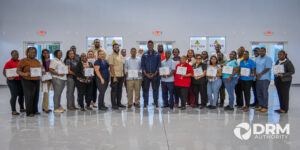
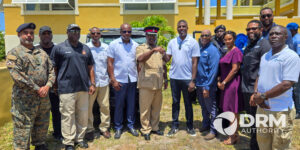
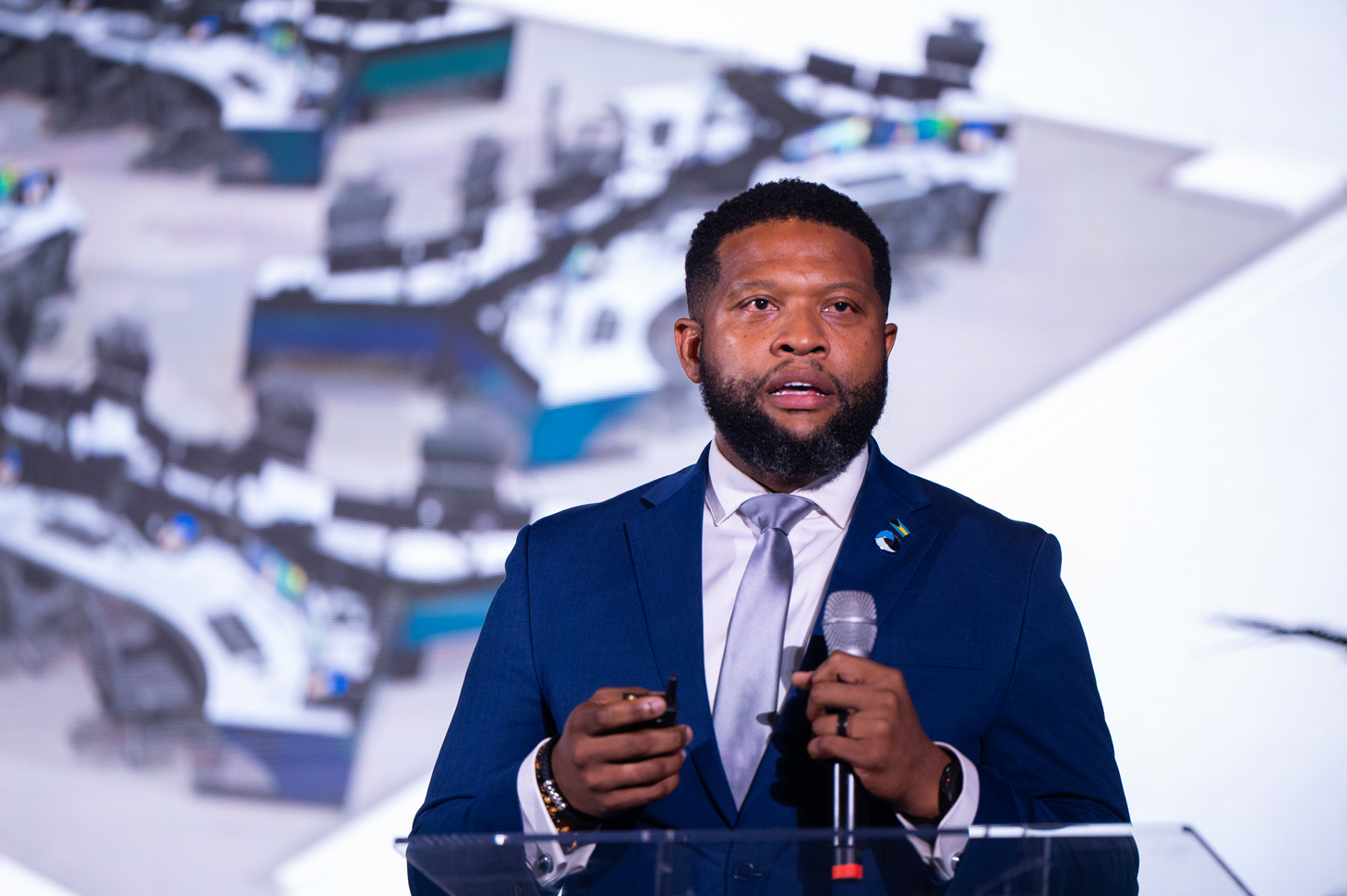
Earlier this month, the Disaster Risk Management Authority and the Inter-American Development Bank co-hosted a Whole-of-DRM symposium, “From Recovery to Resilience: Seven Years After Dorian.” The event brought together the Prime Minister, the Minister of State with responsibility for Disaster Risk Management, partners from across government and the Family Islands, and representatives from the region for an honest assessment of how far we have come and the work still ahead. That discussion should extend beyond the conference room because it concerns every Bahamian.
Seven years ago this month, Hurricane Dorian stalled over Abaco and Grand Bahama and delivered a catastrophe the country had never seen. Lives were lost. Communities were displaced. Essential services failed. The total cost was US$3.4 billion: US$2.5 billion in direct damage and a further US$900 million in indirect losses and emergency-response costs.
It is tempting to say that Dorian broke our disaster system. The harder truth, and the one I shared at the symposium, is that Dorian did not create our gaps; it exposed them.
In 2018, the IDB’s Index of Governance and Public Policy in Disaster Risk Management, based on evidence gathered in 2017, scored The Bahamas at 17.44 percent overall. In practical terms, the assessment found clear, verifiable evidence that The Bahamas met only 17.44 percent of the legal, institutional and budgetary conditions it considered fundamental to effective disaster risk management. Preparedness was our strongest area at 37 percent, yet it was still considered to be at an early stage of development. The warning lights were on before the wind ever rose. But those statistics represent where we were. Here is where we are now.
The Disaster Risk Management Act, 2022, laid a new foundation. It established the National Disaster Risk Management Policy and created the DRM Authority, which became operational on 1 July 2024, to build on that foundation.
The Act calls for thirteen national instruments: the plans, strategies, funds, systems, protocols and standards that translate the policy into action and guide how the country prepares for, finances, coordinates and manages disaster risk. Today, with the DRM Authority leading and coordinating their development and implementation, the majority of those instruments have either been completed or are in progress. Completed instruments include the National Disaster Emergency Plan, National Disaster Coordination Protocols and National Humanitarian Assistance Standards. The Comprehensive Financial Strategy for DRM has also been completed and paved the way for the establishment and seeding of the Disaster Emergency Fund and Disaster Prevention Fund. We are finalising the development and implementation of the regulations and operating guidelines that will ensure accountability and transparency.
With financial support from generous partners, the Authority is advancing a major redesign and retrofit of the National Disaster Emergency Operations Centre to improve inter-agency collaboration.
Important groundwork has also been laid for the National Disaster Risk Management Plan and Family Island Disaster Risk Management Plans, or what the Act calls “local plans.” For the first time, public-sector institutions and Family Island administrations are required to develop their own disaster risk management plans with guidance from the DRM Authority. Adopting this approach will mean that readiness is not something Nassau does on behalf of the islands, but something every community across our archipelago owns.
The DRM Authority has also changed how we test our preparedness systems. For more than a decade, national tabletop exercises were run centrally, with Family Island representatives travelling to participate in scenarios designed in the capital with Nassau as the focus. Those exercises tested national procedures, but they did so far from the facilities, communications and people that would actually be used when a storm hits Inagua, Bimini or any island in between.
The DRM Authority reimagined the model and took the exercises to the islands. Through Regional Disaster Readiness Exercises conducted in 2025 and 2026, we have delivered 14 exercises across 12 Family Islands, training island administrators alongside their local responders, utility companies, and community partners, and enabling them to test their own systems on their own ground.
The principle is simple: you cannot fix what you have never tested, and you cannot truly test a local system from a distance.
The DRM Authority has also worked to place our shelter system on a stronger, data-driven footing and improve the national shelter inventory. For the first time, structural and operational data tell us how strong a hurricane each shelter can safely withstand and how many people it can accommodate.
When the DRM Authority began operations in 2024, national shelter capacity stood at just over 13,000 people. Following its 2026 hurricane shelter inspection programme, the Authority approved 121 shelters with a combined capacity of 15,347 people. That represents meaningful progress, but national capacity remains well below the international benchmark of shelter space for approximately 10 percent of the population. For The Bahamas, that would mean capacity for roughly 40,000 people.
Another major accomplishment is the completion of The Bahamas’ 2025–2030 Country Work Programme. We revised the programme to align fully with the Caribbean Disaster Emergency Management Agency’s Comprehensive Disaster Management framework and shaped it through stakeholder engagement and validation. It now gives the country one agreed roadmap, with shared priorities, responsibilities and measures of progress. Many voices, one national roadmap.
Several major pieces of work remain to be completed, chief among them a National Recovery Framework, so that the next time we rebuild we do so by design rather than improvisation. Our national early warning capability must be strengthened by integrating the Common Alerting Protocol into national standard operating procedures. Community Emergency Response Team training must reach many more Family Island settlements. And we are building the Disaster Assessment and Response Intelligence System, or DARIS, a national disaster intelligence capability that will give decision-makers real-time damage assessment and recovery information, the kind of evidence we simply did not have in September 2019.
The greatest challenge, though, is not a system or a document. It is a habit of mind. Disaster risk management in The Bahamas has too often been a seasonal exercise: attention rises in June, peaks in September and fades by December. A country that sits in the path of stronger and slow-moving storms cannot afford that rhythm. Risk must be built into how every ministry, corporation, business and family plans, budgets and makes decisions year-round.
So, I closed the symposium with a question, and I put it now to every organisation reading this: if a major hurricane were forecast to make landfall in 72 hours, who in your organisation takes charge? Which of your services cannot be allowed to fail? What must be protected? How do we protect our families and homes? And what information must reach the DRM Authority and the wider national system for us to act as one country? If the answers do not come quickly, you have found your starting point. Designate a disaster focal point. Work with us to develop and test your plans. Make your people available for training and readiness exercises. Measure your progress honestly.
Dorian taught us that resilience is not a project with an end date. It is a system that must be built, tested, funded, and sustained. Seven years on, that system is taking shape. Finishing it is a whole-of-Bahamas responsibility, and the DRM Authority is committed to the work and encouraging everyone to play their part.
Link to original: Click Here!